
Kirkpatrick Prize for Book Collecting
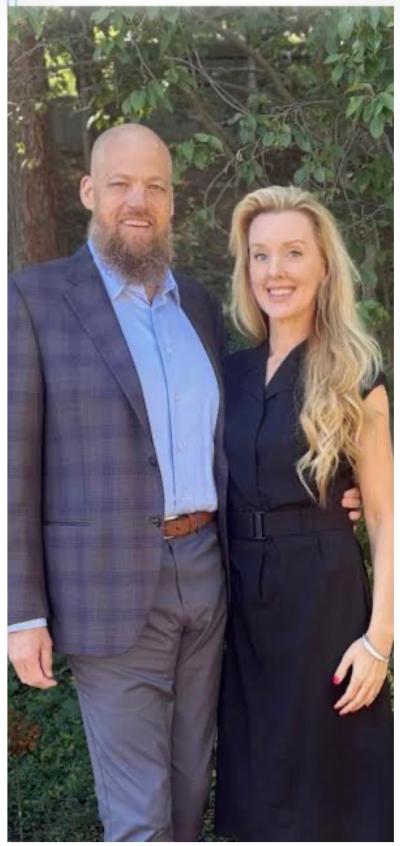
The Taylor C. Kirkpatrick Prize for Book Collecting recognizes and encourages young book collectors under 30 who reside in Colorado. Established in 2021 by Denver bibliophile and philanthropist Taylor C. Kirkpatrick (pictured with Molly Kirkpatrick), the prize is now offered in partnership with the University of Denver Libraries.
Each year's winner receives a $1,000 prize.
Submissions will be judged on their thoroughness, the approach to the subject, and the seriousness with which the collector has cataloged and presented the materials.
All collections of books, manuscripts, and ephemera are welcome, no matter their monetary value or subject.
The 2027 Kirkpatrick Prize is open for submissions from October 12, 2026 – April 5, 2027. The collection must be submitted through the online form.
Past Kirkpatrick Prize Winners
-
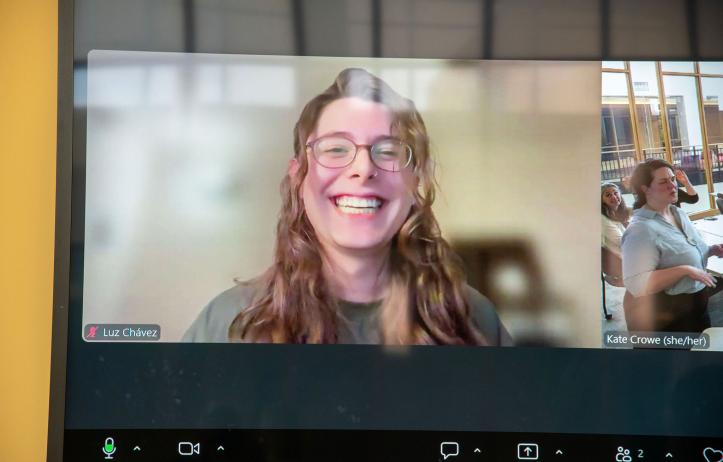
2026 Winner: Luz C.
2026 Winner: Luz C.
Book collection name:
“About Bolivia: Music, Culture, History”
Brief book collection overview:
“About Bolivia: Music, Culture, History” is a collection of ninety-six books, musical scores, and ephemera documenting Bolivian music, culture, and history. The collection brings together primary sources from Bolivia, secondary sources about Bolivia, and works on music, culture, and history that provide context for understanding the country. Much of the collection is musical in nature, with a significant portion devoted to the work of Bolivian composer, musicologist, and teacher Atiliano Auza León. The collection also includes folk music, literature, historical works, photocopied choral scores, and other materials that offer a glimpse into everyday cultural and musical life in Bolivia. Together, these materials form a personal library of Bolivian studies with value for scholarship, performance, and cultural preservation.
How did your collection start:
The collection began in high school as a way to reconnect with Bolivian heritage. Growing up in Fort Collins after parents immigrated from Bolivia, there was a desire to learn more about the culture, history, literature, and music of Bolivia. As a poet and cellist, music became an especially important connection to that heritage. Visits to family in Bolivia provided opportunities to search through boxes, shelves, and piano benches for books and music, as well as to purchase materials from local bookstands and vendors. The collection grew substantially during undergraduate and graduate studies as academic work increasingly focused on Bolivian culture and music. Many materials by Atiliano Auza León were purchased directly from the composer, while other items came from family members, friends, street vendors, and local music schools.
One book you’d like to add to your collection: A future addition would ideally be a rare or locally produced work that expands the collection’s representation of Bolivian music, literature, or everyday cultural life. Particularly meaningful would be a work connected to Tarija or Santa Cruz de la Sierra, the hometowns of the collector’s parents, or an early publication by a Bolivian composer or writer. Such an addition would continue the collection’s goal of preserving materials that might otherwise be difficult to find and making them available for future study and appreciation.
-
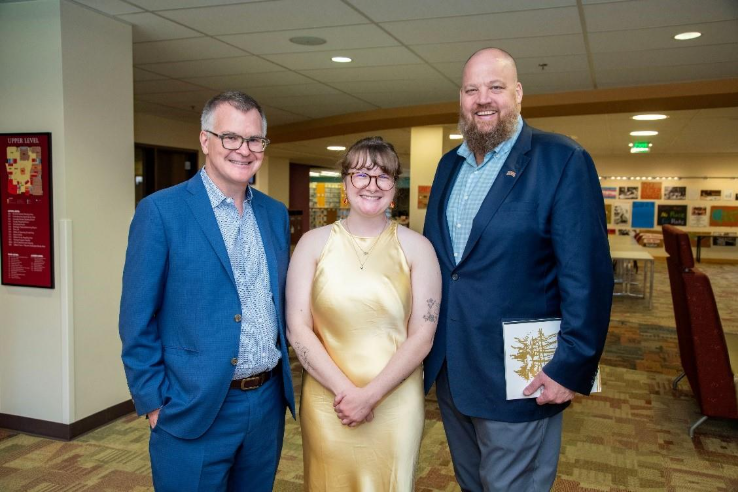
2025 Winner: Rose M.
2025 Winner: Rose M.
Book collection name:
“Books About Books: The History of Books and Libraries, from the Middle Ages to the Present.”
Brief book collection overview:
This collection consists of a wide range of books pertaining to the history of books (especially medieval manuscripts and rare books), the book trade, libraries, and book ownership. The scope of my interest in the history of books and book collecting is wide, and thus as is the nature of my collection. I am a lover of manuscripts, libraries, and the rare book trade (and its many intersections) and have collected according to my own interests and practical use. The books in this collection range from works of scholarship that I consult in my cataloging work and research daily, such as The Palaeography of Gothic Manuscript Books and Capelli’s Lexicon Abbreviaturarum, to books in which I see my own love of fine printing and collecting, such as The Invention of Rare Books or The Kelmscott Press. Some of the most cherished books in my collection represent relationships, such as my paperback copy of Meetings with Remarkable Manuscripts or my copy of Henry Bradshaw and the Foundations of Codicology.
How did your collection start:
The collection originated with my purchase of Introduction to Manuscript Studies by Clemens and Graham for my Manuscript Studies course at Ohio State in Autumn 2018. I was nineteen years old, a sophomore in college, and had no idea that my life was about to change forever. This course, and this book, inspired a love of medieval manuscripts and book collecting that has defined my professional and collecting goals ever since.
One book you’d like to add to your collection: On Parchment, by Bruce Hollsinger, which discusses the making and use of parchment around the world.
-
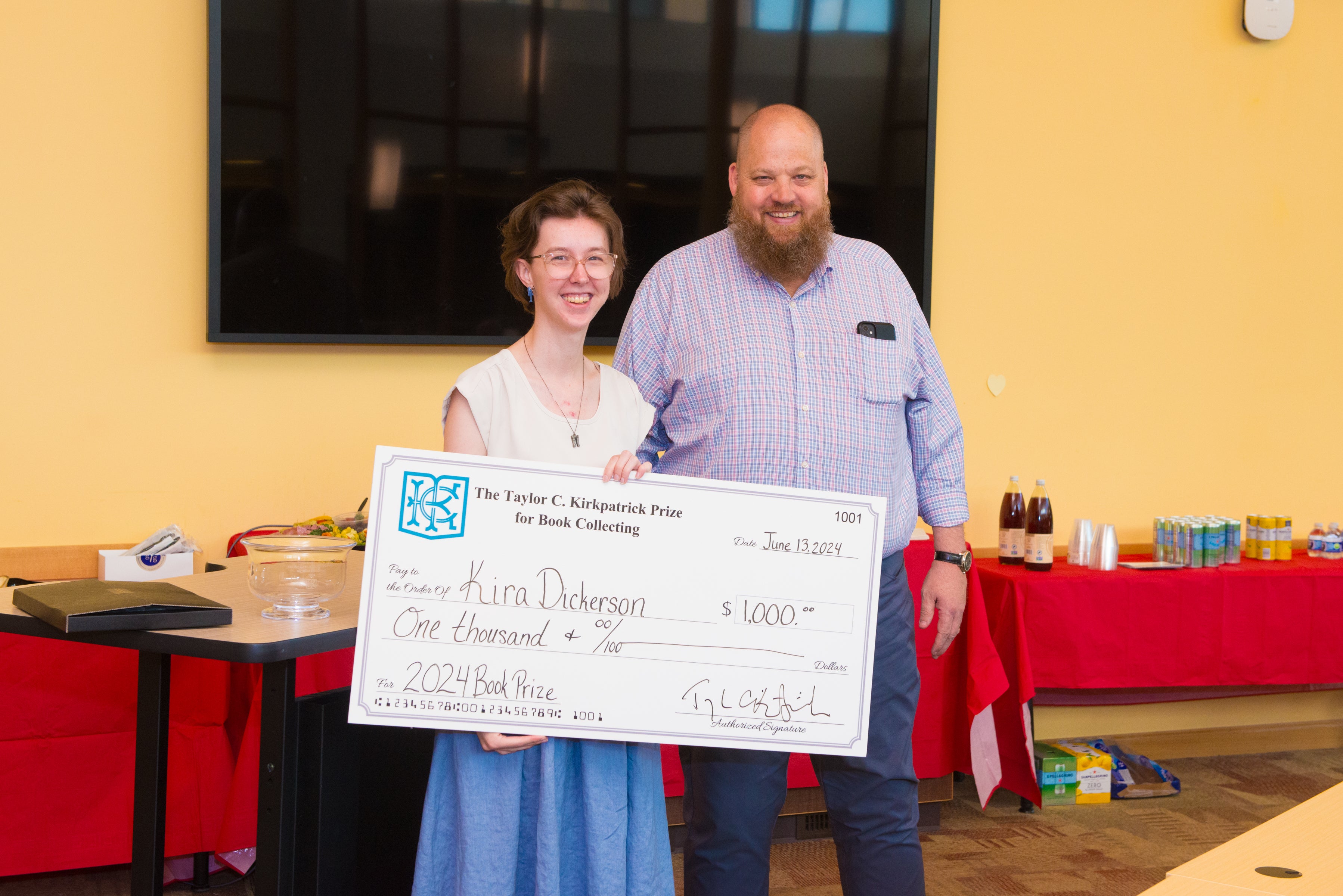
2024 Winner: Kira D.
2024 Winner: Kira D.
Book collection name:
"How Food Makes Us"
Brief book collection overview:
"What is your favorite food? Your parents’ favorite foods? Or their parents’ favorite? Food is something boring, something new, something utterly mundane - and something unique. How we make our food, and what foods we make, has changed through time and through culture, but remains a vital part of connection to others. Vintage cookbooks and recipes offer an insight into the past, humanizing those who came before us."
How did your collection start:
"Food’s connection to family, life, and togetherness is shown clearly in these memories. These foods
bring people together, and keep them connected to our past. The book includes the major sections of any cookbook, but the knowledge that a special memory is connected to each one
makes this book unique. Each member of the extended family as of 2015 was given a copy,
allowing the legacy of my great-grandparents to continue into the future. Dad’s Pancake Recipe,
Leon’s Red Cinnamon Pickles, Mama’s Caviar - recipes from people that have since passed,
who we can still cherish and remember through the food they shared with their family. My
mother’s favorite foods are in this book, my grandparents’ favorite foods are in this book - the
uniqueness of food, and the memory it holds, all available for generations to come."One book you’d like to add to your collection: Apacius. Apicius de re Coquinaria.
-
2023 Winner: Angie N.
2023 Winner: Angie N.
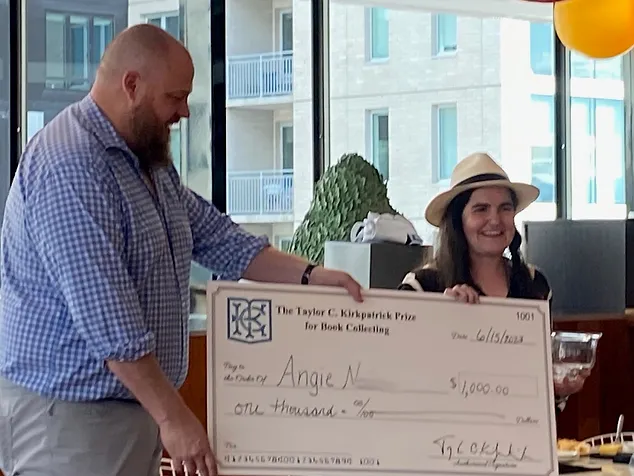
Book collection name:
Colección de Libros Latinoamericanos (Latin American Book Collection)
Brief book collection overview:
“My colección de libros latinoamericanos (Latin American book collection) reflects my wide-ranging interest in Latin America: its history, music, myths, art, and more. The collection centers around the subjects that most captivate my interests, and it also includes nods to some of the scholars that helped shape my passion for Latin American studies.”
How did your collection start:
“My collection began during my senior year of high school in 2012 with Jorge Luis Borges’s genre-exploding masterpiece Ficciones, in which he redefined the possibilities of both short fiction and philosophy. I had begun reading books in Spanish earlier that year to get a better handle on the vocabulary and grammar of the language I had been studying in Denver Public Schools since 2005. Over the next couple of years my collection rapidly expanded with other modern classics like Gabriel García Márquez’s Cien años de soledad and Isabel Allende’s La casa de los espíritus, as I discovered that reading in Spanish was a way to not only build my linguistic abilities but also to experience some of the greatest literary achievements of the past century as they were originally written.”
One book you’d like to add to your collection: Eduardo Galeano’s Las venas abiertas de América Latina (The Open Veins of Latin America)
-
2022 and 2021 Winners: Sarah K. and Sam W.
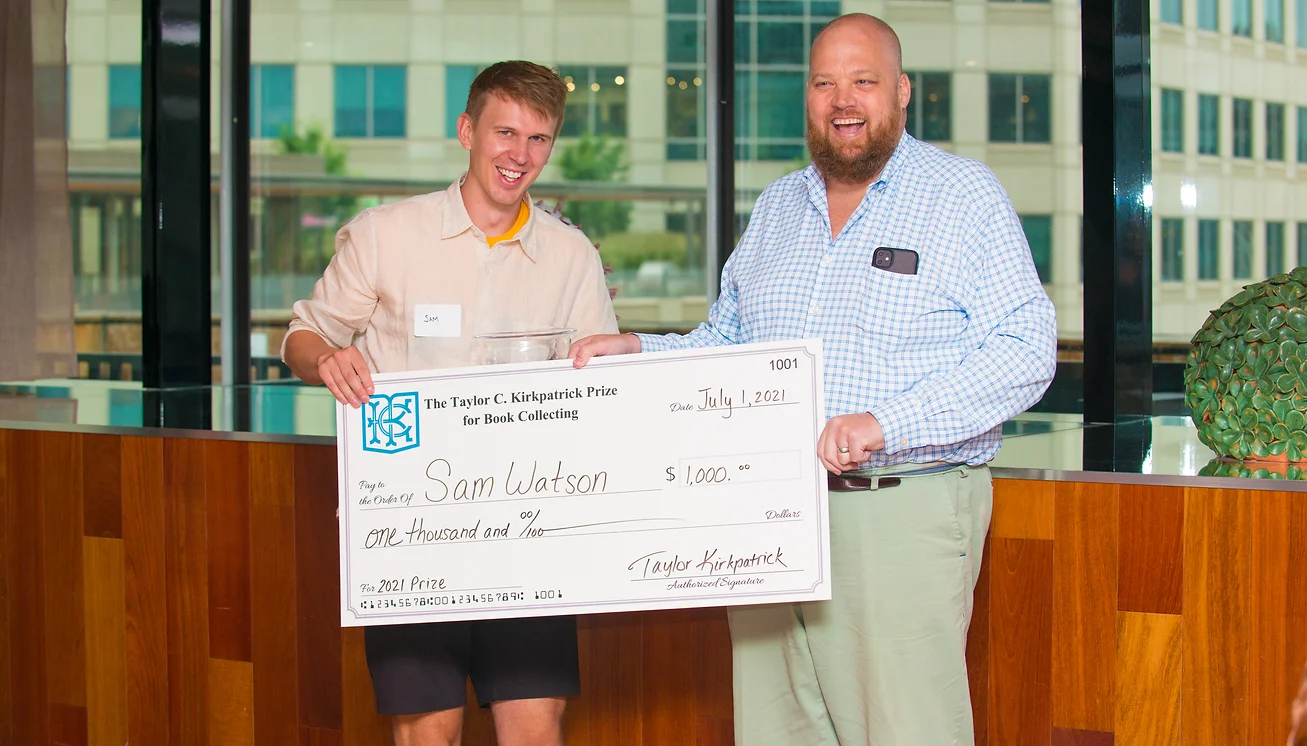
2021: Sam W., collecting Japanese literature in translation, with an emphasis on women authors.
2022: Sarah K., book collection name "America: How We Got Here, and How It's Going."
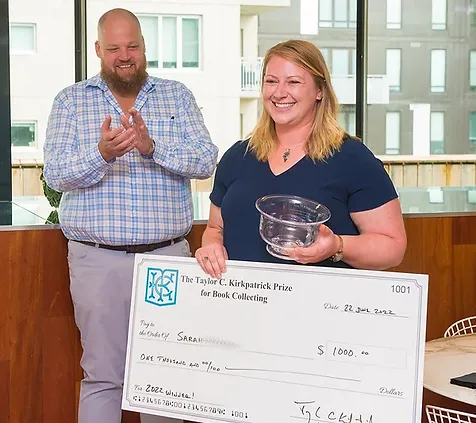
Book collection name:
America: How We Got Here, and How It’s Going
Brief book collection overview:
“My collection can be categorized into five main areas of interest:
- Incredibly broad discriminatory policies that have impacted how entire populations of people function (or don’t) within the United States.
- Specific voices and documents that have contributed to transformative times in the US, both functionally and atmospherically
- Infrastructure of the country; formal and informal policies that have contributed over time to how the built environment affects the lives of people living in the US
- The United States’ goals surrounding scientific and militaristic advancement, and how the achievement of those goals continue to impact the world it exists in
- Artistic interpretations and commentary of the United States, especially in the realms of federal government and politics”
“Quite possibly the most prized item in my entire library is A Quarter-Century of Un-Americana. What I appreciate most about this publication is two-fold. Firstly, that it is a snapshot of an incredibly interesting and disturbing period of United States history encapsulating the Red Scare, the Cold War, and the resulting House Un-American Activities Committee. And secondly, that it is a particularly unique publication illustrating the extremism of the period not in textbook-like information, but as collected and organized satire from the time.”
How did your collection start:
“I was born and raised in the United States of America. Barring a lucky seven months in between jobs, I’ve always lived here. I learned the elementary school version of our history, with a few more details added on every year, all the way through high school. Sometimes from those increasingly grizzlier details, but more often from learning about history outside of school – on trips with my family, through meeting people outside of the bubble I grew up in, and by seeking out media created from a variety of perspectives – I began to form a very different understanding of how the United States got to be where it is today, and how that impacts how we move into the future. I know I’m not alone in this coming-of-age realization, and furthermore, my privilege impacted the experiences that contributed to my starting point of understanding my country’s path thus far. But that’s why I started forming this category of books for my personal library.”
One book you’d like to add to your collection: Black Reconstruction in America 1860-1880 by W.E.B. Du Bois
Contact
Special Collections & Archives
-
archives@du.edu
-
303-871-3428
-
View Hours
-
Anderson Academic Commons